Tuesday, October 29, 2019

Mama Goonie Bird


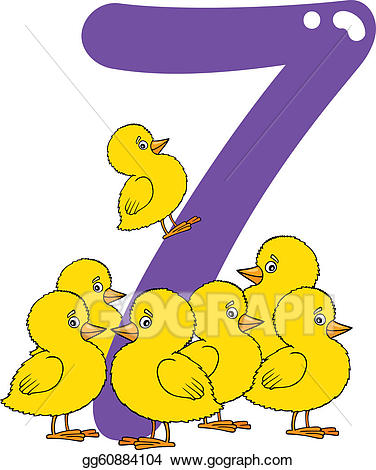
First Graders learned the song "Mama Goonie Bird" to help them practice keeping the beat.  Beat competency is such an important skill for students, and we spend a lot of time on it in our First Steps in Music curriculum.  So many advanced musical skills build off of the ability to keep the beat.

Ask your child to sing the song for you.  It goes like this: 

Mama Goonie Bird, had seven chicks,
Seven chicks had Mama Goonie Bird.
And they couldn’t walk,
and they couldn’t talk,
But they all could go like this!
Spoken: One wing!


Repeat the song, adding

“Both wings!”, “Add your foot”, “both feet”, “add your head”, “sit down”

As students add each body part, they should continue singing, keeping the beat with their "wings" or feet. This is a skill that takes practice, especially when adding multiple movements at once. Try it with your child!

Hear Mrs. Tibbett's class sing the song below:


Below is another great recording of this song, sung by Jill Trinka. We moved to this recording in class after the students had learned the song well.


Once students were comfortable singing this song on their own, we also added instruments.  Students used the tambourine, tone block, jingle tap, maraca, and claves to keep the beat instead of their bodies.


Down, Down

Image result for leaves clipart

In honor of autumn, 1st grade students learned the song "Down, Down."  We focused on musical contour in this song, listening for when the tune was high and when it was low.  We used our bodies to show how the notes moved, falling gently like leaves, then gradually standing back up.

Ask your child to sing this song for you.  The words are: 

Down, down, 
Yellow and brown,
The leaves are falling 
All over town.


Up, up, 
Up they fly,
Over the roof, 
Up into the sky!

Hear Mrs. Tibbett's 1st grade class sing the song here:

Image result for boomwhackers
Once students were comfortable singing the song independently, we added the Boomwhackers! These colored plastic tubes make different sounds when we hit them. Students used their science knowledge to discover that the smaller the tube, the higher the sound. We were able to play the whole song using the Boomwhackers.


Two Little Apples

Image result for two apples clipart

Kindergarten students learned a fingerplay called "Two Little Apples."  Fingerplays helps students learn to speak and sing using expression by matching their movements to their voices.

Can your child teach you this rhyme?  Here are the words and motions: 

Two little apples, (Make two fists)
Hanging in a tree. (Point up)
Two little apples, (Make two fists again)
Smiled at me. (Touch mouth and smile)
I shook the tree as hard as I could.
(With both hands shake imaginary tree)
Down came the apples, (Make fists fall down)

Mmmmm, they were good. (Rub tummy)

Students quickly memorized this rhyme and were able to perform it independently. Next, we brainstormed sounds that we might hear while eating an apple. Students came up with words such as "crunch, crunch," "drip, drip, drip," "yummy," and "mmmm." We used these words to create a rhythmic pattern which we used as the B section of this song, alternating the rhyme with our own pattern.

Creating our own short musical ideas is one of the goals of the Massachusetts Music standards, so this activity was good practice for students.

The Leaves Are Green


Kindergartners just learned a new autumn circle game!  Circle games are an important way for children to learn to work together and participate in musical play.

This circle game is called "The Leaves Are Green."  Students walk in a circle, holding hands, until the very end when they all fall down together!  We talked about the way leaves fall from trees and modeled it with our bodies to make sure we were all falling safely and gently like leaves.

The words to this song are:

The leaves are green,
The nuts are brown.
They hang so high,
They won't fall down.
Leave them alone 'til frosty weather
And they'll all fall down together!

Play this game with your child.  We played with the whole class, but you only need two people to play!  Vary the speed every time and try changing directions!

Hear Mrs. Curci's kindergarten class sing this song below:


Monday, October 28, 2019

Miss White Had a Fright

Image result for ghost eating toast

2nd graders have been hard at work learning to decode patterns and songs in duple meter.  Recently, they were challenged to decode the rhyme "Miss White Had a Fright" the first time they heard it!  Students heard a line of the rhyme and immediately repeated it back using rhythm syllables.  This was challenging because each line of the rhyme had a different rhythm.  Being able to hear these rhythm syllables in the music we listen to will help us to eventually be able to read and write the rhythms.

This rhyme goes like this:

Miss White had a fright,
In the middle of the night.
Saw a ghost, eating toast,
Halfway up the lamppost.

Can your child teach you this rhyme?  Are they able to decode it using rhythm syllables?

Pumpkin, Pumpkin

Image result for pumpkin clipart

2nd graders learned a festive circle game called "Pumpkin, Pumpkin."

The words and movements are: 


Pumpkin, Pumpkin
(pat legs, clap, pat legs, clap)
Round and fat.
(pat legs, clap, clap partner’s hands)
Turn into a jack o’lantern
(keep hands joined with partner, switch places)
Just like that!
(clap, clap, jump to turn around)

Students enjoyed discovering a new partner each time they sang the song. We knew the song was done when we arrived back at our original partner.


Hear Ms. Steiger's 2nd grade class sing the song below.


In the Hall of the Mountain King

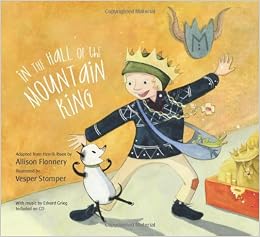
Image result for in the hall of the mountain king book

Third grade students have spent the month of October learning about the song "In the Hall of the Mountain King" by Edvard Grieg.  This piece was written as part of the Peer Gynt Suite, and each part of the song tells a story of the adventures of Peer Gynt.  During this particular song, Peer sneaks into the hall of the mountain king, tiptoeing along until he is caught and needs to run out.

We started by listening to the song and adding "head, shoulders, knees, and toes" movements.  As the song got faster, our motions got more complex.  Can your child teach you the motions?  Try to do the motions with the music:


After hearing the song for several weeks, I posed the following question:

"What is the mood of this piece of music? How did the composer use elements of music to convey the mood of this piece?"

Students wrote their answer, using wonderful musical vocabulary to explain that the song was spooky or intense.  They provided examples such as "the song went from slow to fast" or "the song went from soft to loud" to support their topic sentence.

After writing, students finally learned the title of the piece, and we read the book of the same title, adapted by Allison Flannery and illustrated by Vesper Stamper.  This story told the story that went along with the song.


To close out our unit, students got to play the song on the Boomwhackers, colored plastic tubes that each make a different sound.  We played along with this video: